
Let me tell you how this started. Not with a pitch deck. Not with a funding round. With doctors I’d worked with for years calling me and asking: “Wouter, can you build something for us?”
But I’m getting ahead of myself.
12 Years Inside Aesthetic Medicine
In 2014 I joined Crisalix, the Swiss company behind the 3D imaging technology used by plastic surgeons worldwide. I started in Barcelona as a Product Specialist — running demos, onboarding surgeons, learning the business from the ground up across Europe.
Within a year I’d moved to Prague. Not to join an office — to open one. Crisalix had never had a dedicated SDR team before. I built it from scratch: recruited the people, created the playbook, introduced the entire SDR model to the company for the first time.
Then in 2016, the Philippines. Same story, bigger scale. I launched Crisalix Philippines from zero — legal entity, physical office, hiring, onboarding, training SDR and customer success teams. A complete operation built from the ground up in a new country.
By 2020 I was VP Sales for APAC, the Middle East, and Turkey. We’d grown to over 300 active clinics across the region. I built and managed remote multilingual teams, established distributor networks, and drove the integrations that made Crisalix the standard for 3D patient imaging in those markets. Today, as VP of Channel Sales & Strategic Partnerships, I lead global partner strategy and EMR integrations.
But the titles don’t tell the real story. What twelve years gave me is something you can’t shortcut: I know how practices actually work.
Not in theory. I’ve been in the clinics. I’ve sat with practice managers going through their lead flow. I’ve watched front desk staff juggle phone calls while patients walk in and website inquiries pile up unanswered. I’ve seen why some practices convert 60% of their consultations while others struggle at 20% — and it almost never comes down to the surgeon’s skill. It comes down to how the practice communicates.
I learned the difference between how a solo plastic surgeon in Dallas manages their pipeline versus how a multi-location medspa in Sydney handles patient flow. I learned what you can and can’t say under HIPAA, AHPRA, and UK advertising standards. I learned that most practice management software was built for billing and scheduling — not for the patient journey that happens before someone ever walks through the door.
That’s the gap I kept seeing. Year after year.
Testing the Thesis with Humans First
In 2018, while still at Crisalix, I founded ChatPatient — a managed live-chat service built specifically for plastic surgery and aesthetic medicine practices.
The insight was simple, and I saw it everywhere: practices spend thousands on marketing to drive leads to their website, then lose most of them because nobody’s available to respond when patients are actually ready to engage. Evenings. Weekends. Lunch breaks. The exact moments when people sit down and research cosmetic procedures.
ChatPatient put trained operators — people who understood aesthetic medicine, not generic call-center agents — on those websites to catch what practices were missing. It worked. Practices saw real increases in booked consultations.
But what I learned building ChatPatient was even more valuable than the revenue. Patient conversations in aesthetic medicine are predictable. The same questions come up over and over. The same objections. The same decision points. The same moments where a practice either captures a patient or loses them forever.
I didn’t know it at the time, but I was building the playbook that would later become Romea.AI’s brain.
“Can You Build This for Us?”
By 2024, AI had matured enough to handle what my human chat operators had been doing — but faster, 24/7, across every channel simultaneously.
I’d been experimenting with AI for years. Building things, testing things, always looking at how the technology could solve the problems I saw in the field. And the people I’d worked with for a decade knew that about me. They’d seen how I work — building SDR operations from scratch at Crisalix, running live-chat teams at ChatPatient, always finding technical solutions to problems that their software vendors couldn’t figure out.
So the calls started coming. Not from strangers. From surgeons and practice managers I’d known for years.
Wouter, can you build something that handles our after-hours inquiries?”
Can you automate our follow-up? We’re losing patients between the first call and the consultation.”
Can you get AI to actually work with our EMR? Because nothing we’ve tried does.”
They didn’t want a generic chatbot vendor. They wanted someone who understood their world.
I couldn’t say no.
Why Romea.AI Is Different
I’ll be blunt about this. There are a lot of AI companies targeting aesthetic medicine right now. Most of them were built by engineers who read a few articles about plastic surgery, added some medical terminology to their AI, put “HIPAA compliance” on the website, and started cold-emailing.
Their demos look fine. Then reality hits. The AI doesn’t know the difference between a surgical consultation and a medspa appointment. It can’t handle the sensitivity required when someone asks about a revision procedure. It definitely can’t book into your EMR because it has no idea how Symplast or Nextech actually work.
The Unfair Advantage
I built Romea.AI with an edge no competitor can copy: I’d already done it by hand. Twice.
At Crisalix, I built SDR teams with humans — learning exactly how to qualify leads and move prospects through a pipeline in aesthetic medicine. At ChatPatient, I built live-chat operations with humans — learning exactly how patients communicate, what makes them book or bounce. Every qualification gate, every conversation branch, every follow-up sequence in Romea.AI exists because of a pattern I observed across hundreds of real practices.
And I don’t just design what the system should do — I architect how it works at every level. Which AI models to use and why. How to integrate with EMR systems that don’t offer public APIs. How to route conversations across SMS, WhatsApp, Instagram, and voice without losing context. How to build AI that knows the difference between a Botox inquiry and a rhinoplasty consultation.
This technical depth goes back long before aesthetic medicine. I’ve been building technology since the 1990s — online real estate platforms, SaaS systems for corporate housing, VoIP infrastructure with carrier-grade routing. The approach has always been the same: understand the system, architect the solution, and make it work.
What This Means for Your Practice
Romea.AI launched in 2025. Within months we were serving practices across the US, Australia, and the UK. Every single client came through referrals. No marketing spend. No cold outreach. No paid ads. Surgeons telling other surgeons: “This actually works.”
That’s what happens when you build something for an industry you’ve been part of for 12 years, based on problems you’ve personally watched practices struggle with, using playbooks you developed by hand before automating them.
If your practice is losing leads after hours, if your front desk is overwhelmed, if your follow-up sequences are inconsistent, if your AI experiments so far have been disappointing — I’ve probably seen your exact situation before. Many times.
I’d love to show you what we’ve built. Not a generic demo — a conversation about your practice, your challenges, and how we can solve them.
Because that’s how every client relationship I’ve ever had started. With a conversation.
Get Started
Ready to see what Romea.AI can do for your practice?
Stop losing patients to after-hours silence. Let’s talk about your specific challenges — no generic demos, no hard sell.
About the Author
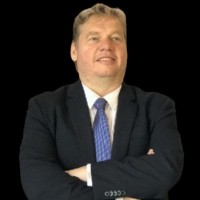
Wouter Slettenhaar
Founder & CEO, Romea.AI
Wouter has spent 12+ years inside aesthetic medicine as VP of Channel Sales & Strategic Partnerships at Crisalix — growing the regional client base to 300+ active clinics across APAC, EMEA, and the Middle East. Founder of ChatPatient (managed live-chat for aesthetic practices). He speaks seven languages and is based in Asia-Pacific.